


Diabetes mellitus is a chronic multisystem disease in which all types of metabolism are disrupted.It is characterized by impaired insulin secretion or action, accumulation of glucose in the blood (hyperglycemia), urine (glycosuria) and the development of complications.
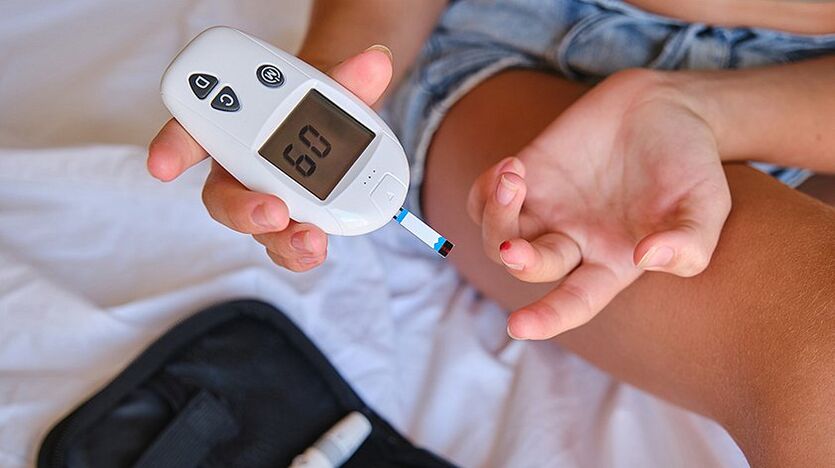
The modern clinic employs endocrinologists with many years of experience in the field of endocrinology.Doctors will be able to correctly determine the degree of diabetes mellitus compensation, identify existing complications and prescribe or adjust a treatment program.
How does glucose metabolism normally occur?
Glucose is the body's main source of energy.It enters the body with food, mainly carbohydrates, or is synthesized through a series of metabolic reactions from fats and proteins.Excess glucose accumulates in the liver and muscles in the form of glycogen and is used as needed.
All tissues of the human body are divided into insulin-dependent (muscles, adipose tissue, cardiomyocytes) and non-insulin-dependent (brain, red blood cells, cornea, liver, kidneys).In order for glucose to pass into the insulin-dependent tissue cell and be used in cellular metabolism, insulin is required.It is produced in the β cells of the pancreas.Insulin acts like a key that opens the lock for glucose to enter the cell.Insulin-independent tissues receive glucose by simple diffusion, passively.
When everything in the body is working correctly, the process of glucose entering insulin-dependent tissues occurs dynamically and no problems occur.When the production of insulin is disrupted (for example, when the pancreas is damaged), or the mechanism of its action in the cell is disturbed (the cellular “lock” is broken), glucose begins to accumulate in the body and cellular hunger develops in the cells.
Next we will see what happens when glucose accumulates in the body and the different types of diabetes.
Classification
Experts distinguish several main types of diabetes.Let's focus on the four most common:
- Type I (old name: insulin dependent);
- Type II (old name: insulin independent);
- Gestational;
- Symptomatic.
Let's look at each type in more detail.
Type I diabetes mellitus
This type of diabetes mellitus develops as a result of damage to the β cells of the pancreas, the source of insulin in the body, which results in a state of absolute insulin deficiency.One of the common causes of cellular damage is the development of an autoimmune process, when pancreatic cells begin to be perceived by the body as foreign.Antibodies accumulate against them, completely destroying the source of insulin.
Other causes of pancreatic beta cell destruction:
- effects of chemicals (nitrosamine, pesticides, some medicines);
- infectious lesion (measles, rubella virus, cytomegalovirus);
The disease develops when more than 80% of cells are destroyed.
Type I diabetes mellitus is typical of young people and often appears at an early age, acutely, with a rapid increase in clinical symptoms.
Type II diabetes mellitus
Type II diabetes mellitus (old name: insulin-independent) develops as a result of a violation of the receptor apparatus of cells, due to which insulin resistance is formed in the body.
With this type of diabetes mellitus, insulin is produced in the required volume, but insulin-dependent cells stop responding.Relative insulin deficiency leads to decreased glucose utilization by muscles and adipose tissue, which contributes to the development of hyperglycemia.
The causes of type II diabetes are:
- hereditary predisposition;
- overnutrition, obesity;
- physical inactivity;
- state of chronic stress.
Table 1. Comparative characteristics of type I and type II diabetes mellitus.
| To sign |
Type I |
Type II |
| Prevalence |
15% |
85% |
| Start of the disease |
More often in childhood or adolescence |
Middle age and old age |
| Acute |
Long-term progressive |
|
| Development of symptoms |
Fast |
Slow |
| Phenotype (appearance) |
Lean |
Obesity |
| Insulin level |
Missing |
Increased |
| Insulin resistance |
- |
+ |
| Insulin deficiency |
Absolute |
Relative |
| Ketoacidosis |
+ |
- |
Gestational (diabetes during pregnancy)
Physiological pregnancy is characterized by two significant changes in glucose metabolism:
- Constant supply of glucose to the placenta and fetus.During pregnancy, due to the increased consumption of glucose, its level in the body decreases more quickly compared to a non-pregnant woman.
- Decreased tissue sensitivity to insulin in the second trimester of pregnancy, which results in the formation of insulin resistance.
This condition is caused by an excess of hormones: progesterone, cortisol, prolactin, which have a counter-insular effect (block the action of insulin).This reduces the sensitivity of fat and muscle tissue to insulin.
Physiological pregnancy is characterized by both insulin resistance and a compensatory increase in pancreatic β-cell functioning, which helps maintain optimal glucose metabolism.In women with impaired glucose tolerance, the compensatory capabilities of β-cells are insufficient, which leads to the formation of hyperglycemia.
Diagnosis of gestational diabetes mellitus
To reduce the risk of complications for both the mother and the fetus, it is necessary to correctly diagnose and correct gestational diabetes mellitus.
Diagnosis is carried out in 2 phases:
- The first phase is carried out when a pregnant woman visits the doctor for the first time before 24 weeks of pregnancy.The woman undergoes one of the tests: venous blood donation on an empty stomach, glucose tolerance test or determination of glycated hemoglobin HbA1c.
- The second phase is carried out in pregnant women in whom no carbohydrate metabolism disorders were identified in the early stages.Diabetes mellitus is diagnosed by performing a glucose tolerance test with 75 g of glucose between 24 and 28 weeks of pregnancy.
A norma de glicemia de jejum em mulheres grávidas é inferior a 5,1 mmol/l. Após uma hora, durante um teste oral de tolerância à glicose, os valores normativos são inferiores a <10,0 mmol/L, e após 2 horas superiores a 7,8 mmol/L e inferiores a 8,5 mmol/L.
Pathological indicators of venous glycemia are the following values:
- on an empty stomach more than 7.0 mmol/l;
- glycated hemoglobin (HbA1) greater than 6.5%;
- the glucose value is more than 11.1 mmol/l (the time of day and the last meal do not matter).
These cases indicate manifestation of gestational diabetes mellitus and require immediate insulin therapy.
High fasting values that do not correspond to the diabetes manifest parameters – greater than 5.1 mmol/l, but less than 7.0 mmol/l, place the pregnant woman in a group at increased risk of diabetes.Such women are advised to carry out rational diet therapy, dynamic control of glycemic levels and the condition of the fetus.
Symptomatic diabetes mellitus
This type is secondary and is caused by impaired glucose metabolism due to various diseases or medications.These conditions include:
- diseases of the exocrine pancreas (pancreatitis, cancer, cystic fibrosis);
- medicinal diabetes mellitus - when taking glucocorticosteroids (have a counterinsular effect, reduce the production of insulin in the body), phenytoin, estrogens (oral contraceptives).
Symptomatic diabetes mellitus can usually be treated by addressing the underlying cause of the diabetes (for example, by changing or stopping a medication).
Why is hyperglycemia bad?
We have already discovered that a lack or dysfunction of insulin leads to the accumulation of glucose in the blood.When the renal threshold is reached (>8.8 mmol/l - the value at which the kidneys begin to pass glucose when filtering the blood), glycosuria develops.Glucose is an osmotically active substance, which is why it binds to water and leads to polyuria, loss of large amounts of water by the body and compensatory activation of the thirst center.
Polyuria (excretion of a large volume of urine in large portions) leads to dehydration of the body, a decrease in blood volume in the bloodstream, a decrease in blood pressure and hypoxia of tissues located on the periphery.This is fraught with the risk of thromboembolism and the development of disseminated intravascular coagulation syndrome.
Furthermore, the pressure drop is less than 50 mm.Rt. Art.leads to a slowdown in renal blood flow, up to anuria (lack of urination) and the development of acute renal failure.
There is a peculiarity in the pathogenesis of type I diabetes mellitus - absolute insulin deficiency leads to the activation of contrainsular hormones (insulin antagonists): T4, adrenaline, cortisol, somatotropic hormone, glucagon.
The following hormones improve all types of metabolism, which leads to an even greater increase in glucose:
Lipolysis is the destruction of fats, which leads to the formation of large amounts of free fatty acids (FFA), and from them - glucose.
FFA are an alternative source of energy in the body, serving as the basis for the formation of ketone bodies (e.g. acetone).An increase in ketones in the blood and urine causes vomiting, metabolic acidosis (decrease in blood pH) and compensatory hyperventilation of the lungs (noisy and deep acidotic Kussmaul breathing occurs).The accumulation of ketones leads to one of the serious complications - ketoacidotic coma.
- Gluconeogenesis is a metabolic pathway through which glucose is synthesized from non-carbohydrate sources (amino acids, fatty acids).
- Glycogenolysis is the process of glycogen degradation (storage of glucose in the liver).
Symptoms
We have already dealt with the main links in the pathogenesis of diabetes mellitus, now we will outline the clinical symptoms by which this disease can be suspected:
- thirst (polydipsia) - associated with dehydration;
- frequent urination (polyuria) - occurs due to the fact that glucose is osmotically active and binds to water;
- increased appetite - occurs due to the fact that glucose does not enter the cells, a state of lack of energy is formed in them;
- dry skin, peeling, itching - these symptoms appear as a result of dehydration and dysfunction of the sweat and sebaceous glands;
- pustular skin diseases - occur as a result of a decrease in the body's resistance;
- weakness, depressed mood.
Early complications
Early complications are acute conditions characterized by a rapid increase in clinical symptoms and require immediate medical intervention from a doctor.
Early complications of type I diabetes
- Ketoacidotic coma is most often observed in the first type of diabetes mellitus.It is characterized by a strong, “fruity” odor in the mouth, depression of consciousness, weakened reflexes, diarrhea, nausea and ketoacidotic Kussmaul respiration.
Other complications are also characterized by depression of consciousness, reflexes and a decrease in blood pressure:
- Hyperosmolar coma
- Lactic acidotic coma
- Hypoglycemic coma
The differential diagnosis of the type of coma is made through biochemical analysis of blood, urine and the acid-base status of the blood.
Early complications of type II diabetes
- Hyperosmolar coma – seen most frequently
- Lactic acidotic coma
- Hypoglycemic coma
Late complications
These include:
- microangiopathies: retinopathy, nephropathy;
- macroangiopathies: coronary disease, angina pectoris, atherosclerosis, hypertension, chronic cerebral ischemia, acute cerebrovascular accident;
- neuropathies (polyradiculoneuropathy, radiculopathy, lumbar plexopathy);
- deposition of sorbitol in tissues (cataract);
- immunodeficiencies: pustular diseases, prolonged tissue scarring);
- diabetic foot - pathological changes in the peripheral nervous system, arterial and microcirculatory beds, osteoarticular apparatus of the foot with the development of ulcerative-necrotic processes and gangrene.
Mechanisms of late complications
Late complications of diabetes are mainly associated with blood vessel damage.Its main mechanism is the glycosylation of all protein structures in the body (vascular endothelium, basement membrane, nerve ending vessels).
Glycosylated proteins:
- increase the permeability of the vascular wall and disrupt the rheological properties of blood, which provokes the development of thrombosis;
- promote the production of pro-inflammatory factors that damage small capillaries;
- block vasodilation;
- increase lipid peroxidation, which results in the production of reactive oxygen species that damage tissues;
- contribute to the development of endothelial dysfunction and increase the risk of atherosclerosis.
As a result of these processes, the walls of small vessels become rigid, inelastic and prone to rupture.The speed of blood flow in small vessels decreases and blood viscosity increases.
Cataract
Cataract is one of the common late complications of diabetes mellitus.
It is formed due to the fact that excess glucose enters alternative metabolic pathways.One such pathway is the polyol oxidation pathway to sorbitol.Sorbitol is a compound that increases osmotic pressure in the chambers of the eye and causes clouding of the lens.
Diabetic glomerulosclerosis
This nephropathy is accompanied by morphological changes in the capillaries and arterioles of the renal glomeruli, leading to their closure (occlusion), sclerotic changes, progressive decrease in the filtration function of the kidneys and development of chronic renal failure.
Diabetic neuropathy and retinopathy
Diabetic neuropathy is characterized by damage to the central and peripheral nervous system, which is clinically manifested by impaired sensitivity.
Diabetic retinopathy is characterized by damage to retinal capillaries, arterioles and venules with the development of microaneurysms, hemorrhages, exudative changes and the appearance of newly formed vessels.
Diabetes treatment
Type 1 diabetes mellitus is treated with insulin.Insulin, based on the duration of its action, is divided into:
- ultra-short acting - used before each meal.Onset of action from 5 to 15 minutes, duration from 2 to 5 hours;
- short acting - used before each meal.It starts to act after 30 minutes and lasts for 5 to 8 hours;
- average duration of action - begins to act in 1 to 2 hours, duration of action is 18 to 24 hours.Necessary for the occurrence of basic energy processes;
- prolonged action - begins to act after 1 to 2 hours, lasting 18 to 36 hours.Necessary for the occurrence of basic energy processes.
Doctors treat type II diabetes mellitus in 3 stages.
1st stage of treatment:
- in people with normal body weight - diet therapy (limiting foods rich in carbohydrates);
- For people with excess body weight, obesity therapy is carried out: more active diet therapy (strict limitation of the total calorie content of food, carbohydrates and animal fats), regular dosed (therapeutic) physical activity, changes in lifestyle, implying increased physical activity at home and in leisure time.
2nd stage of treatment:
- the use of drugs that stimulate β cells: sulfonylurea derivatives, biguanides;
- the use of medications that increase the sensitivity of insulin receptors in muscle and adipose tissue: thiazolidinediones.
Stage 3 of treatment: insulin therapy.
Principles of treatment in emergency conditions
Ketoacidotic coma:
- insulin and glucose replacement therapy;
- restoration of fluid volume, electrolytes and blood pH.
Hyperosmolar coma:
- restoration of fluid volume and osmotic blood pressure by administration of hypotonic (0.45%) sodium chloride solution (2-3 liters);
- administration of electrolytes with short-acting insulin preparations in small doses (5-10 U/hour).
Advantages of in-clinic treatment
- Doctors will perform a complete diagnosis of the body for the presence of diabetes and its complications for treatment.
- We will select an individual treatment program based on the latest clinical recommendations and the doctors' many years of clinical experience.
- Doctors will provide the patient with detailed consultations about what recommendations and rules should be followed by people with diabetes.